In her work, the artist Maren Strack operates at the intersection of physicality, materiality, and technology. Through performances, installations, and unusual material experiments, she challenges conventional notions of art, femininity, and physical limits. From magnetic kitchen utensils and latex dresses to dancing machines, her works are an intensive exploration of the nature and narrative potential of materials. In doing so, she often raises questions about societal role models and the transformation of female images in the context of art, technology, and autonomy. In this interview, she provides insights into her creative practice, sources of inspiration, and the significance of art as a catalyst for social change. In the future, difgl will use its expertise for Maren Strack’s marketing and public relations with regard to networking, marketing, and connection, as it also makes it available to small and medium-sized enterprises. We are pleased to present Maren Strack’s work at this point:
The Breathshow
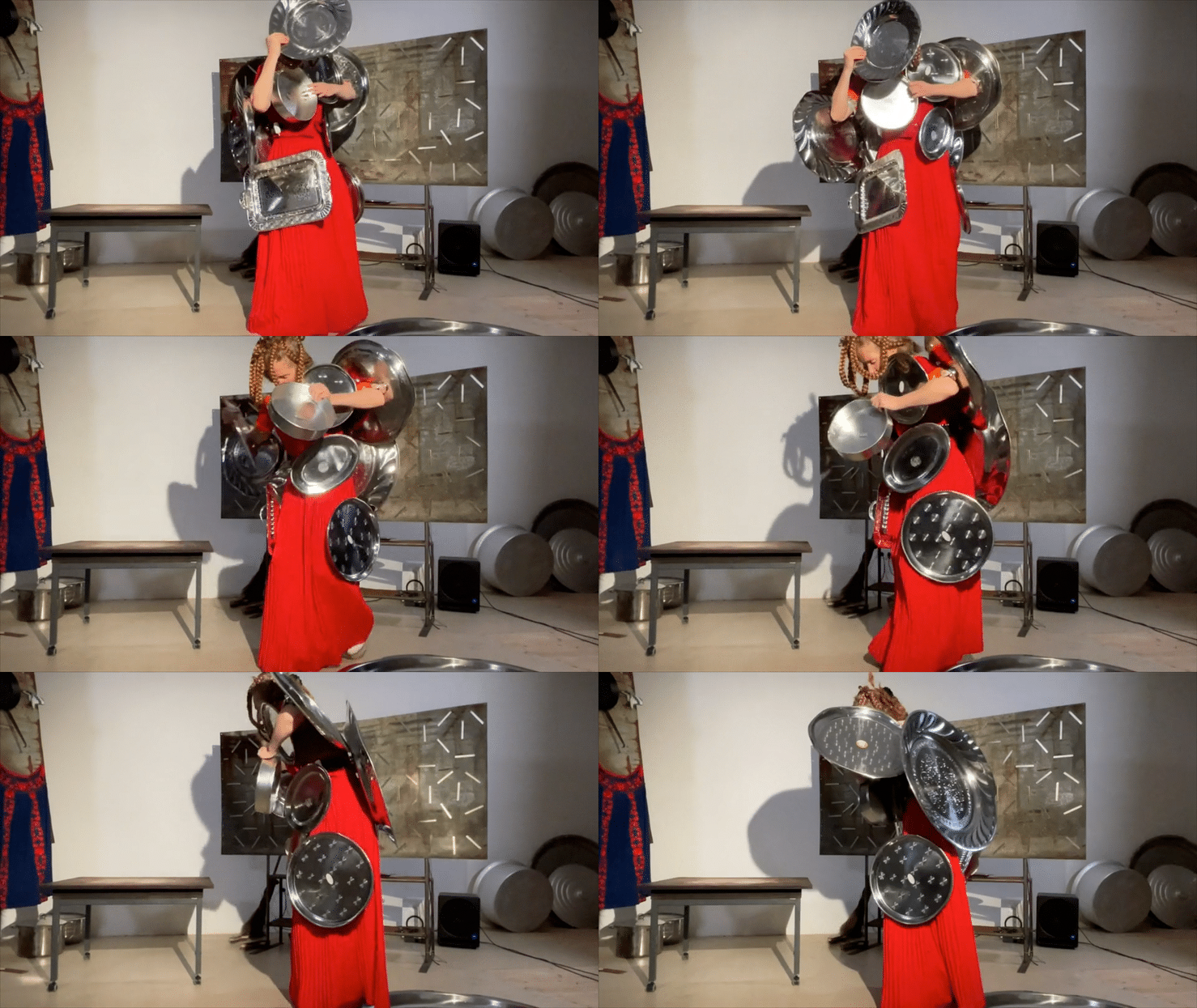
Your work often seems to operate at the intersection of physicality, materiality, and technology. How does the idea for a performance come about – does it begin with an idea of movement, a particular material, or a technical experiment? It varies greatly: In Women at the Stove, kitchen utensils made of metal, magnets on costumes and kitchen walls were at the beginning – so the material. In addition, there were electromagnets in the platform soles of the shoes, which can, for example, magnetize brooms and pots and release them again – so a technical experiment. In the performance Latex, on the other hand, the idea of movement gave the first impulse: When watching a classical ballet, I had the idea of making the immense power with which dancers jump visible. For this, I attached the hem of a highly stretchable latex dress to the floor: The force of the jump is thus braked. When the dancer figure jumps, the dress visually stretches far in length, while the latex fabric simultaneously slaps audibly against the legs.
Women At The Stove – Maren Strack, 2022
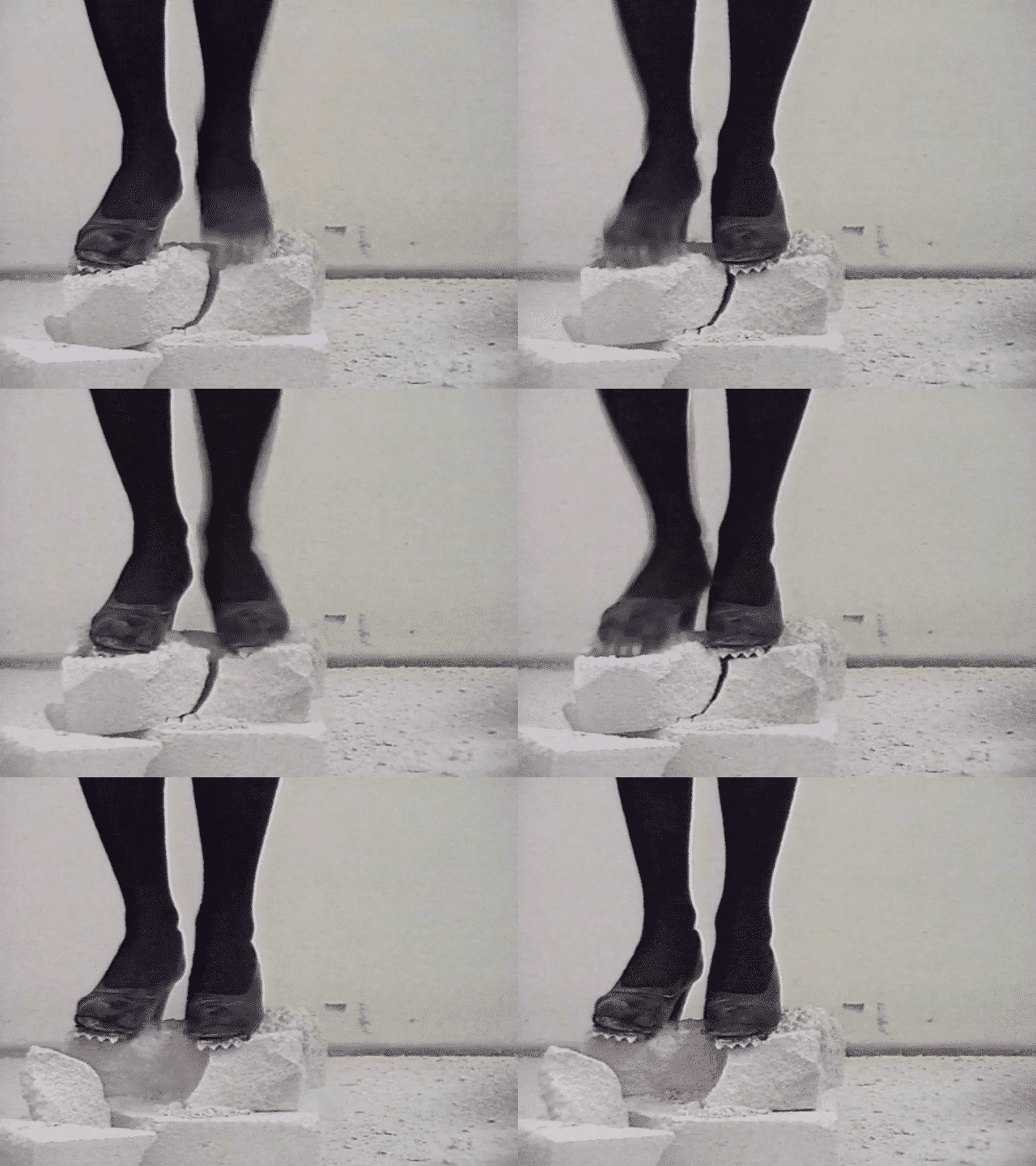
You often expose your body to extreme physical stress in your work. What role does this boundary experience play in the statement of your performances? And how do you reflect on the expectations of female bodies in the process? In the performance Ytong, I dance flamenco on a Ytong stone, with thick spikes under my dancing shoes – until the stone is broken down into rubble and dust. Through an act of destruction, I reach my physical limits by dismantling the base, the pedestal on which I dance. It becomes increasingly fragile until I fall down. Here, the sculpture is not created in a conventional artistic creation process, but through its reversal, the destruction. At the same time, I am dismantling the image of the dancer: From the initially “classical” flamenco – in pumps, with castanets – the destruction of the base turns into a swaying balancing act. The flamenco increasingly gets out of time, my movements become arrhythmic, rowing, until I fall.
YTong – Maren Strack 2001
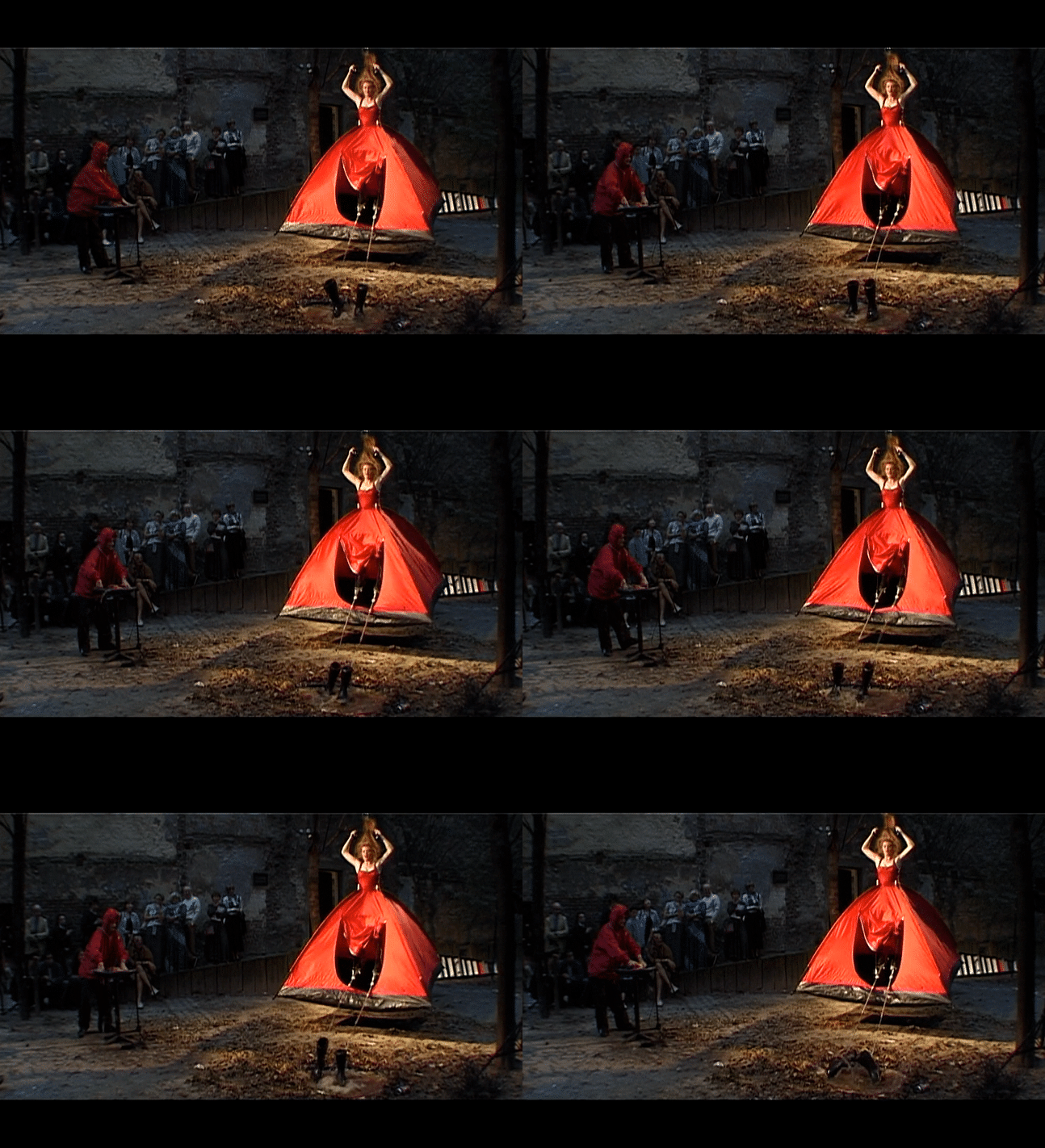
How do you choose your materials, and what do they reveal about the narratives you want to tell? I check the materials for their choreographic usability: How do they break, fall, shatter, stretch, sound, swing? Are the material processes and resulting sounds interesting? Are the materials and their installative arrangement coherent, do narratives arise that I sometimes, but not always, control. In the performance Spare Tires, I dealt with the racing driver Clärenore Stinnes; for me, her story was a kind of underground on which I worked. Often, however, the images and stories arise in the minds of viewers and art critics: In Muddclubsolo, I wear a red outdoor tent as a dress and hang on my hair, which is braided into a braid, which reminded many of the figure of Olympia from the stories of E.T.A. Hoffmann.
MUDDCLUBSOLO – Maren Strack 2001
The theme of femininity runs like a red thread through your work. How do you define modern femininity in an artistic context – especially in the field of tension between autonomy, technology, and body? It is very often about images of women and women’s roles. When I started my studies at the Art Academy in Munich, there was a shelf “Women” in the library. It was that simple: The few performance artists that existed at that time were simply sorted into a corner. That was striking! Specifically, I ask different questions in my performances. An example: For millennia, women in almost all parts of the world have been reduced to the kitchen and the stove. They were confined and restricted in the smallest space, in their freedom of movement, in their actions, in short: in their dignity as individual personalities with all their possibilities. And although this has changed a lot in our society, much of what women can do and do is still ranked rather low on the scale of values. With Women at the Stove, I return to the place where women were deprived of their dignity: It is a heavy metal art performance with household appliances. Emancipated, self-confident, with a lot of energy. The kitchen becomes a percussive-scenic sound space, the woman at the stove becomes an artist who is all that women have long been forbidden to be: visible, loud (also quiet), unique.
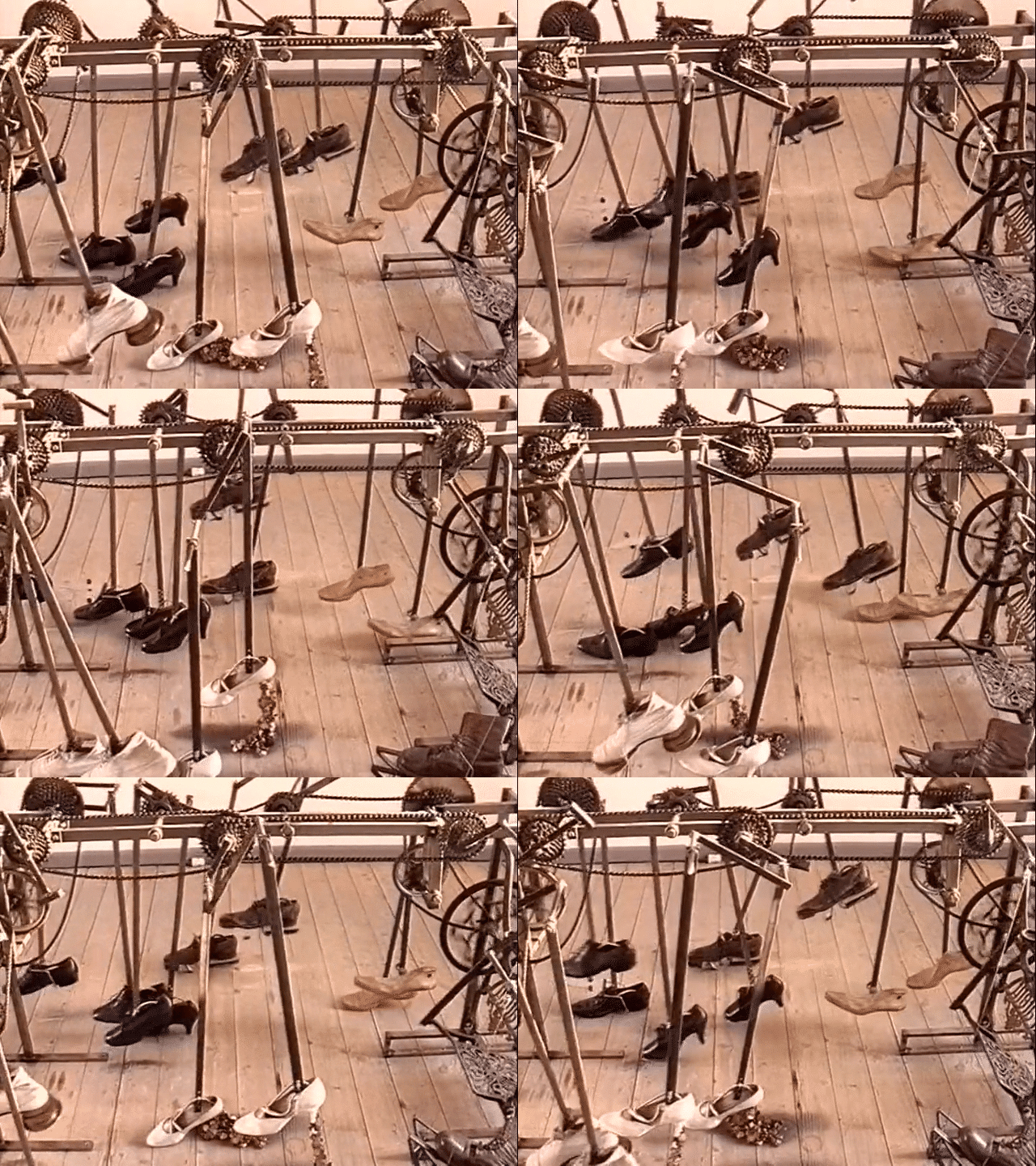
Your performances often work even without your physical presence, such as in installations or retrospectives. What does this independence of your works mean for your role as a performer and artist? Actually, it only means that I don’t always have to be physically present. I once tried to perform with an installation running independently of me, the Walking Machine. That was a machine that had seven pairs of dancing shoes running at the same time. These shoes were prepared by me with different materials, so that they produced different sounds. In the process, I realized that it is uninteresting to perform with a stoically running machine. Ultimately, the Walking Machine became an exhibit. Unlike my performances, my installations are performative in that they move, but they are self-contained, mostly repetitive performances.
Walking Machine – Maren Strack 1996
The difgl deals with questions of the good life and social transformation. In your opinion, what impulses can art – especially performative installation art – give to think about alternative ways of life and technologies? Art is always creative and innovative, so there is hardly any area that provides more impulses for social transformation. That is a truism. Whether performance and installation can do this better than other art forms, I do not know. But certainly installations fit into our time of machines, and performance has emerged as a liberation from the constraints of conventional art settings, so both carry highly topical impulses: The installation the mechanical, the performance the great challenge that absolute freedom brings with it: Here it is a matter of casting an anchor again and again in the vast ocean of possibilities.
This site is registered on wpml.org as a development site. Switch to a production site key to remove this banner.